
A Michigan car accident lawyer helps people injured in motor vehicle crashes understand their rights and pursue compensation under Michigan law. Because the state follows a no fault insurance system, accident claims often involve complex insurance rules that determine how medical expenses, lost wages, and other damages are paid after a crash.
“Michigan’s no-fault system can be confusing after a serious crash. Many people assume insurance will cover everything, only to discover later that benefits are limited or that an injury may qualify for additional compensation through a lawsuit. Understanding your legal options early can make a significant difference in how a car accident claim is handled.” – Matthew R. Clark
Understanding how these rules work is important for anyone injured in a collision. This guide explains how Michigan car accident claims are handled, when additional compensation may be available through a lawsuit, and what factors can affect the outcome of a case.
- Michigan uses a no-fault insurance system: medical expenses and wage loss are typically paid through Personal Injury Protection (PIP) coverage regardless of who caused the crash.
- Pain and suffering claims require a serious injury: victims may pursue additional compensation when injuries meet Michigan’s legal threshold for a serious impairment of body function.
- Multiple sources of compensation may apply: claims can involve PIP benefits, third-party liability claims, and uninsured or underinsured motorist coverage.
- Strong cases depend on evidence: police reports, medical records, witness statements, and crash reconstruction help establish liability and damages.
- Legal deadlines apply: strict filing deadlines make early documentation and legal evaluation important after a serious crash.
In-Depth Guides to Michigan Car Accident Claims
Understanding how Michigan car accident claims work often requires navigating several legal and insurance issues, including no-fault benefits, liability rules, medical evidence, and compensation for serious injuries. The guides below explore these topics in greater detail and explain how accident claims are investigated, evaluated, and resolved under Michigan law.
Michigan Car Accident Legal Process
Understand the Michigan car accident legal process, including claim investigation, insurance negotiations, lawsuits, and trial preparation. This guide explains how cases move from initial evidence gathering to resolution.
Common Types of Car Accidents in Michigan
Explore the most common types of car accidents in Michigan, including rear-end collisions, intersection crashes, and multi-vehicle accidents. This guide explains how different crash scenarios affect fault, liability, and injury claims.
Common Car Accident Injuries in Michigan
Review the most common injuries after Michigan car accidents, including whiplash, fractures, traumatic brain injuries, and spinal damage. This guide explains how injury severity can influence medical treatment, documentation, and claim value.
Michigan Car Accident Claims and Compensation
Learn how Michigan car accident compensation is calculated, including medical expenses, lost wages, and pain and suffering damages. This guide explains the factors that influence settlement value and lawsuit outcomes.
Michigan Car Accident Insurance and No-Fault Guide
Review how Michigan’s no-fault insurance system applies after a car accident, including Personal Injury Protection (PIP) medical benefits, liability coverage, and uninsured or underinsured motorist claims. This guide explains which insurance policies may apply and how coverage can affect medical bills, wage loss, and other damages.
What To Do After a Michigan Car Accident
The steps taken in the minutes and hours after a crash can affect both your recovery and any potential injury claim. Michigan’s no-fault insurance system provides certain benefits regardless of fault, but medical records, police reports, and early documentation often become critical evidence if liability or injury severity is later disputed. Taking the right actions immediately after an accident helps protect your health while preserving the information needed to evaluate a car accident claim.
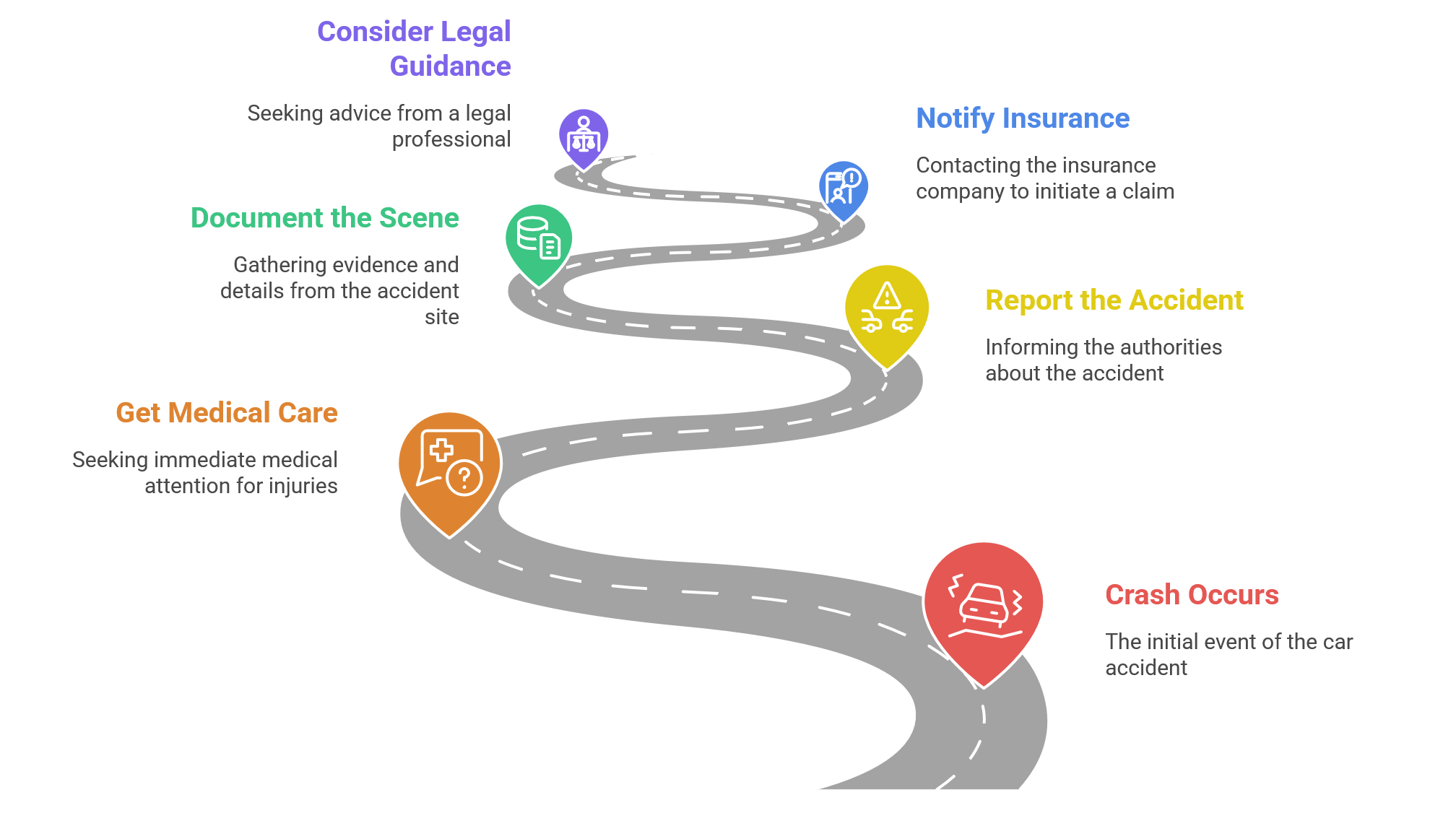
| Step | What You Should Do | Why It Matters |
|---|---|---|
| 1. Get medical care | Seek medical evaluation as soon as possible, even if injuries seem minor at first. | Some crash injuries develop hours or days later. Early treatment protects your health and creates medical records connecting the injury to the accident. |
| 2. Report the accident | Contact law enforcement and ensure an official police report is created when required. | Police reports often document how the collision occurred, identify involved drivers, and record observations that may become important in a claim. |
| 3. Document the scene | Take photos of vehicle damage, road conditions, traffic signals, and visible injuries. Obtain witness contact information if possible. | Physical evidence and witness statements can help establish how the crash occurred if fault or liability is later disputed. |
| 4. Notify your insurance company | Report the accident to your insurer promptly and cooperate with basic claim procedures. | Michigan’s no-fault system requires drivers to seek certain benefits through their own insurer, including Personal Injury Protection (PIP) coverage. |
| 5. Avoid rushed statements | Be cautious about providing detailed recorded statements to insurance adjusters immediately after the crash. | Early statements may be used later when insurers evaluate liability or attempt to limit compensation. |
| 6. Consider legal guidance | If injuries are serious, consult a lawyer before accepting settlements or signing insurance documents. | A lawyer can determine whether the crash meets Michigan’s legal threshold for pursuing pain and suffering compensation against the at-fault driver. |
Bottom Line: Taking the right steps after a crash can protect your health and preserve important evidence if questions arise later about fault or injuries. For a more detailed explanation of these steps, see our guide on what to do after a Michigan car accident.
Do You Have a Car Accident Case?
Not every traffic collision results in a legal claim, but many crashes involve circumstances that allow an injured person to pursue compensation beyond basic no-fault insurance benefits. Determining whether a case exists usually comes down to three key questions: who caused the accident, whether the injuries meet Michigan’s legal threshold for filing a lawsuit, and how fault may be shared between the drivers involved.
Who Caused the Accident?
Most car accident cases begin with determining fault. Drivers have a legal duty to operate their vehicles safely and follow traffic laws. When a driver violates those duties through conduct such as distracted driving, speeding, running a red light, or failing to yield, that conduct may constitute negligence. If negligent driving causes a crash that results in injury, the injured person may have the right to pursue a claim against the responsible driver.
Are the Injuries Serious Enough for a Lawsuit?
Michigan’s no-fault system provides certain insurance benefits regardless of who caused the accident, but lawsuits for pain and suffering are only permitted when injuries meet a specific legal threshold. To pursue a third-party claim, the injury must qualify as a serious impairment of body function, a legal standard that focuses on how the injury affects a person’s ability to live their normal life. Courts typically examine factors such as the nature of the injury, the type of medical treatment required, and whether the condition substantially interferes with work, daily activities, or overall quality of life.

Why the Serious Impairment Standard Is Often the Real Dispute In many Michigan car accident cases, the central legal battle is not whether the crash occurred but whether the injuries meet the “serious impairment of body function” threshold. Insurance companies frequently challenge this issue because it determines whether pain and suffering damages are even available. The outcome often depends on medical documentation, physician opinions, and how clearly the injury affects the person’s ability to live their normal life.
What If Both Drivers Share Fault?
Responsibility for a crash is not always assigned to one driver alone. Michigan follows a modified comparative negligence rule, which means fault can be divided among multiple parties involved in the collision. If an injured person is partially responsible for the accident, compensation may be reduced in proportion to that percentage of fault. A deeper explanation of how this rule works is available in our guide to comparative negligence in Michigan car accidents.
Bottom Line: Michigan’s no-fault system does not prevent lawsuits after a crash. When negligent drivers cause serious injuries, the law still allows victims to pursue compensation for pain and suffering. Determining whether a case qualifies typically requires a careful review of the accident evidence, medical records, and the circumstances that led to the collision.
Understanding Michigan No-Fault Insurance
Michigan operates under a no-fault insurance system, meaning certain benefits are paid through a driver’s own insurance policy regardless of who caused the accident. After a crash, injured drivers and passengers typically seek coverage through Personal Injury Protection (PIP) benefits provided by their own insurer or another policy identified under Michigan’s insurance priority rules. For a deeper explanation of how these rules determine which insurer must pay benefits, see The Complete Guide to Michigan No-Fault Insurance After a Car Accident.
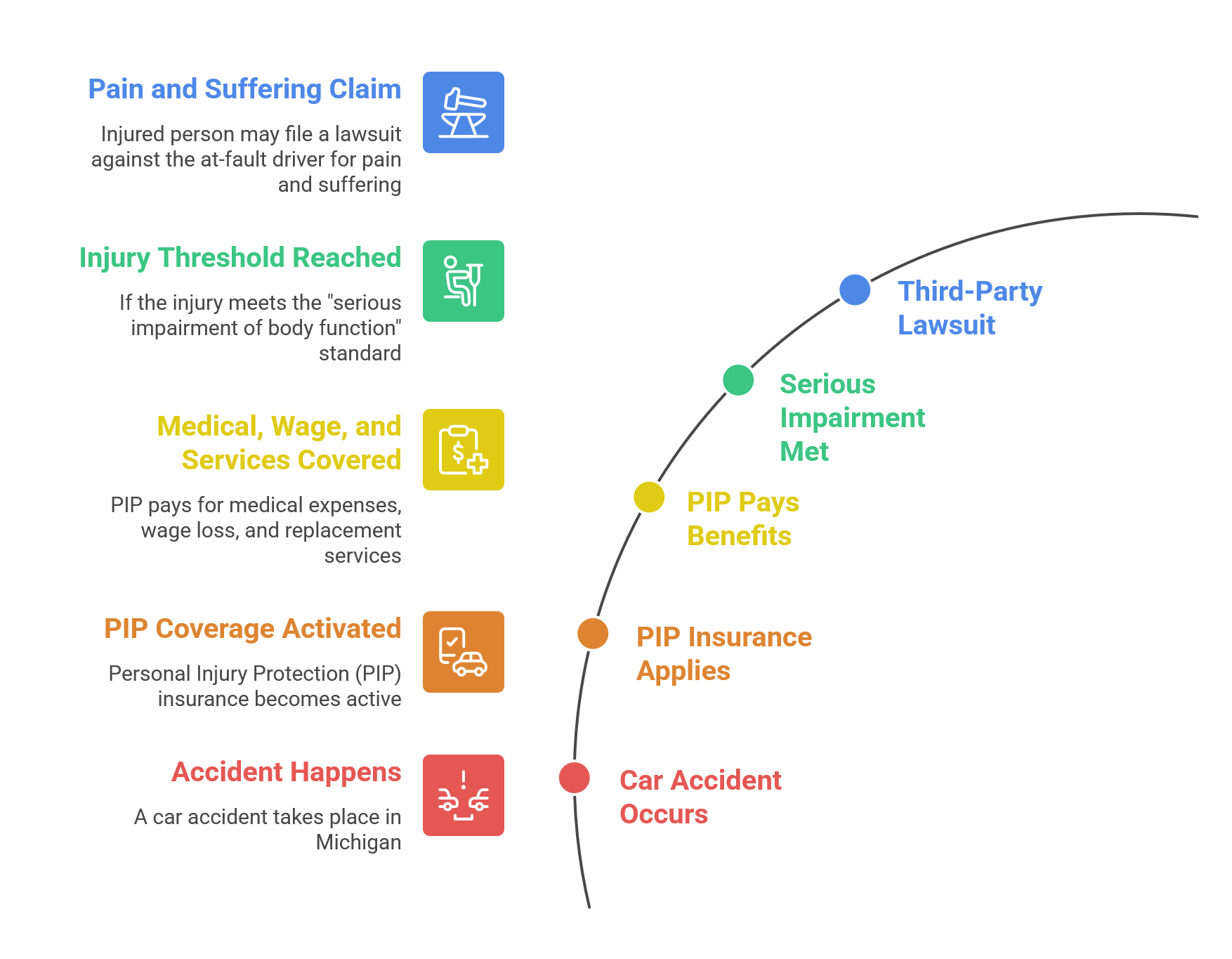
The purpose of the no-fault system is to provide immediate financial support after an accident without requiring injured individuals to prove fault before receiving compensation. These benefits are designed to cover medical expenses and other financial losses while the circumstances of the crash and potential liability are evaluated.
Personal Injury Protection (PIP) Benefits
PIP coverage may provide several important benefits following a Michigan car accident.
| Benefit | What It Covers |
|---|---|
| Medical expenses | Payment for medical treatment related to injuries sustained in the crash, subject to the coverage limits selected in the insurance policy. |
| Wage loss benefits | Compensation for a portion of lost income if injuries prevent an individual from working. |
| Replacement services | Coverage for everyday household services the injured person cannot perform while recovering, such as cleaning, childcare, or meal preparation. |
| Survivor’s loss benefits | Financial support for dependents when a fatal accident results in the loss of income or services previously provided by the deceased person. |
These benefits are available regardless of who caused the accident, which is why the system is referred to as no-fault insurance. A more detailed explanation of how these benefits work, the limits that may apply, and how benefits are calculated is available in our guide to PIP benefits after a Michigan car accident.
When You Can Sue After a Michigan Car Accident
Although no-fault insurance provides important benefits, it does not prevent all legal claims. Michigan law allows injured individuals to pursue a third-party lawsuit against the driver who caused the crash when injuries meet the legal threshold for a serious impairment of body function. When that threshold is met, an injured person may seek compensation for damages such as pain and suffering and other losses that are not covered by no-fault insurance benefits.
Bottom Line: Michigan’s no-fault system ensures that certain benefits are available quickly after a crash, but it does not eliminate the possibility of a lawsuit. When negligent drivers cause serious injuries, the law still allows victims to pursue compensation beyond the benefits provided by no-fault insurance.
How Much Is a Michigan Car Accident Case Worth?
One of the most common questions people ask after a crash is how much is my car accident case worth in Michigan?
The honest answer is that the value of a Michigan car accident case depends on several factors, including the severity of the injuries, the available insurance coverage, and whether the injuries meet Michigan’s legal threshold for pursuing a lawsuit.
Every accident is different. Two crashes may look similar on the surface but involve very different medical conditions, financial losses, or liability issues. For that reason, there is no simple formula that determines the value of a claim.
When attorneys evaluate a car accident case, we typically look at the medical evidence, the financial impact of the injuries, and how the injury has affected a person’s ability to live their normal life. These factors help determine whether the case involves only no-fault insurance benefits or whether it may support a third-party claim for additional compensation.
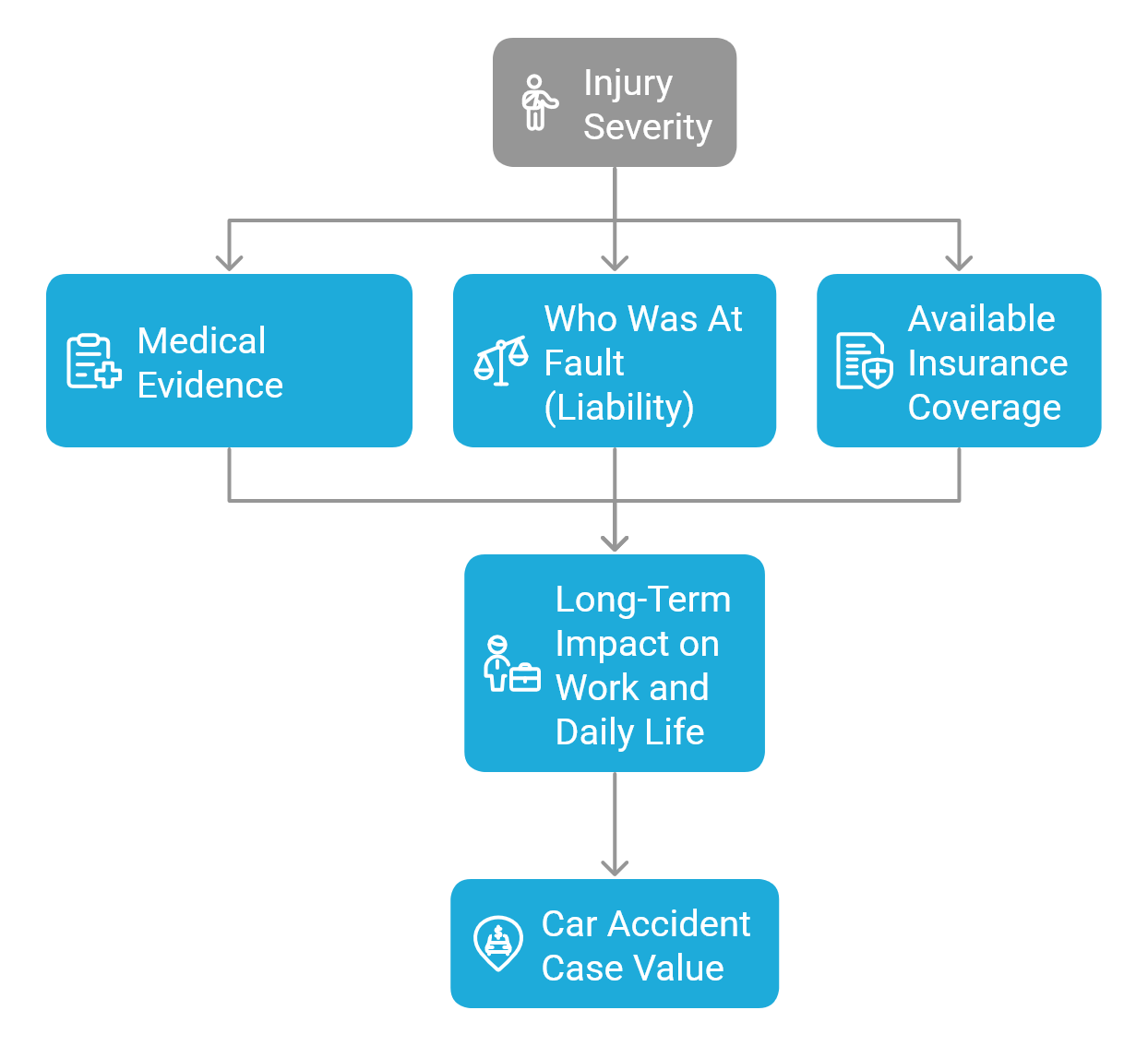
Factors That Determine the Value of a Michigan Car Accident Case
| Factor | Why It Matters |
|---|---|
| Severity of injuries | Serious injuries often require extensive medical treatment and can significantly affect a person’s ability to work or carry out normal daily activities. |
| Serious impairment of body function | Michigan law allows recovery for pain and suffering only when injuries meet this legal threshold. |
| Medical evidence and documentation | Medical records, diagnostic imaging, and physician opinions help establish the seriousness and long-term impact of an injury. |
| Lost income and financial losses | Wage loss and reduced earning capacity can significantly increase the value of a claim. |
| Available insurance coverage | Liability coverage and uninsured or underinsured motorist policies may affect the compensation available. |
When injuries meet Michigan’s serious impairment of body function standard and another driver is responsible for the crash, an injured person may pursue compensation for pain and suffering in addition to economic losses.
You can also review real-world outcomes in our breakdown of the average car accident settlement in Michigan, which explains how injury severity, insurance coverage, and liability issues influence settlement results.
Bottom Line: The value of a Michigan car accident case depends on the seriousness of the injuries, the available insurance coverage, and the long-term impact the crash has on the injured person’s life. Because these factors vary widely from case to case, a careful review of the medical evidence and accident circumstances is usually required to evaluate a claim.
What Compensation Can You Recover After a Michigan Car Accident?
When a serious crash occurs, the financial consequences often extend well beyond the initial medical treatment. Michigan law allows injured individuals to pursue compensation for both the direct financial losses caused by the accident and the broader ways an injury may affect a person’s life.
These damages often include the cost of medical treatment, lost income during recovery, and other measurable financial losses tied to the crash. In cases involving more serious injuries, compensation may also account for reduced earning capacity if the injury permanently limits a person’s ability to return to their previous work or maintain the same level of employment.
In Michigan, compensation after a car accident typically comes from three sources. Injured drivers and passengers may receive No-Fault PIP benefits for medical expenses and lost wages, pursue pain and suffering damages against the at-fault driver when injuries meet the legal threshold for a serious impairment of body function, and recover limited vehicle damage through Michigan’s mini-tort law. In some cases, additional compensation may also be available if medical expenses exceed PIP coverage limits or through uninsured or underinsured motorist coverage.
Some injuries also require long-term treatment or ongoing medical care. When those circumstances exist, compensation may also account for the cost of future medical needs and the lasting effects the injury may have on a person’s life. You can learn more about these issues in our discussion of compensation for future medical treatment after a crash.
Bottom Line: Compensation after a Michigan car accident is intended to address both the financial losses caused by the crash and the broader impact an injury may have on a person’s life. When serious injuries occur, the law allows victims to pursue damages that reflect the full consequences of the accident.
Common Causes of Michigan Car Accidents
Most car accidents occur when a driver fails to operate a vehicle safely or follow traffic laws. Negligent driving behavior often leads to collisions that could have been avoided with proper attention and caution. Some of the most common causes of Michigan car accidents include:
- Distracted driving, including texting, phone use, or other activities that take attention away from the road
- Speeding or driving too fast for conditions, which reduces reaction time and increases crash severity
- Failure to yield the right of way, especially at intersections or during lane changes
- Drunk or drug-impaired driving, which significantly affects judgment and vehicle control
- Following too closely, a leading cause of rear-end collisions in traffic
- Hazardous road or weather conditions, such as snow, ice, and reduced visibility
Bottom Line: Many crashes occur when drivers follow too closely or fail to react in time, which is why rear-end accidents are among the most common types of collisions on Michigan roads.
Common Car Accident Injuries
Car accidents can cause a wide range of injuries, from relatively minor soft tissue damage to life-altering traumatic injuries. The type and severity of an injury often depend on factors such as the speed of the collision, the point of impact, and whether occupants were properly restrained. Some of the most common injuries seen in Michigan car accident cases include:
- Whiplash and soft tissue injuries affecting the neck, shoulders, and back
- Broken bones and fractures, particularly in the arms, ribs, and legs
- Traumatic brain injuries (TBI) caused by sudden impact or violent head movement
- Spinal cord and back injuries, which may result in chronic pain or permanent disability
- Internal injuries and organ damage, which can sometimes take hours or days to appear after a crash
- Lacerations and severe cuts, often caused by broken glass or debris
Bottom Line: Car accident injuries can vary significantly in severity and long-term impact. For a more detailed breakdown of how these injuries occur and how they affect injury claims, see The Complete Guide to Car Accident Injuries in Michigan.
How Insurance Companies Evaluate Car Accident Claims
Insurance companies do not evaluate accident claims based on fairness or sympathy. Their job is to limit financial exposure and protect their bottom line. After a crash, adjusters immediately begin reviewing the evidence to determine whether their driver is responsible and how much the claim might cost the company if it proceeds toward settlement or trial.
In other words, they are not asking what the injury has done to your life. They are asking how much risk the claim represents.
Liability Evidence: The first issue insurers analyze is who caused the accident. Police reports, witness statements, crash scene photographs, and vehicle damage patterns are all reviewed to determine whether their insured driver was negligent. When fault is clear, the claim becomes much harder for the insurance company to dispute.
Severity of the Injuries: Insurance companies closely examine the seriousness of the injuries involved. Claims involving surgery, hospitalization, or significant medical treatment are generally viewed very differently than minor injuries because they signal a higher potential value and greater legal risk.
Medical Documentation: Adjusters carefully review medical records, diagnostic imaging, and physician reports to understand the nature of the injury and whether it can clearly be connected to the accident. Strong medical documentation often becomes one of the most important pieces of evidence in any injury claim.
Long-Term Impact: Injuries that permanently affect a person’s ability to work, perform daily activities, or live a normal life receive greater scrutiny because they may involve substantial long-term damages.
Available Insurance Coverage: Even when liability and injuries are clear, the amount of insurance coverage available under the at-fault driver’s policy can influence how the claim is handled, particularly when damages may exceed policy limits.
What Insurance Companies Really Look For in a Claim In practice, insurance companies evaluate accident claims based on evidence and financial risk rather than the severity of the crash alone. Clear liability evidence, consistent medical treatment, and well-documented injuries tend to carry the most weight during settlement negotiations. When those elements are strong, it becomes much harder for an insurer to minimize the value of the claim.
Why Choose The Clark Law Office
After a serious car accident, the lawyer you choose can affect how your case is investigated, negotiated, and ultimately resolved. Some personal injury firms handle large volumes of cases at once, while others take a more focused approach that allows for closer attention to each client’s situation.
| Case Handling Approach | The Clark Law Office | High-Volume Personal Injury Firms |
|---|---|---|
| Attorney Access | Clients work directly with an experienced attorney handling the case. | Clients may primarily communicate with case managers or support staff. |
| Case Investigation | Careful review of crash evidence, medical records, and liability issues. | Investigations may be limited when firms manage hundreds of cases simultaneously. |
| Case Strategy | Each case is evaluated individually based on the injuries and evidence involved. | Cases may follow standardized processes designed for high volume. |
| Litigation Preparation | Cases are prepared with the expectation that litigation may become necessary. | Some firms prioritize rapid settlement to manage large caseloads. |
Bottom Line: The lawyer you choose after a serious crash can affect how your case is investigated, negotiated, and resolved. At The Clark Law Office, clients work directly with an experienced attorney who carefully evaluates the evidence and develops a strategy focused on protecting the client’s long-term interests. Local knowledge can also matter, particularly for crashes that occur in the Lansing area. You can read more about how our firm handles these cases on our Lansing car accident lawyer page.
Case Results
Serious car accident claims are rarely straightforward. Insurance companies often dispute liability, question the extent of injuries, or delay meaningful negotiations until a case is fully developed. The results below reflect outcomes achieved in significant motor vehicle injury cases through careful investigation, strong medical documentation, and a readiness to pursue litigation when necessary.
$4.75M
Recovered
Fatal Truck Accident Settlement
Delivery truck collision. Liability disputed. Resolved after extensive litigation.
$2.3M
Recovered
Rear-End Car Accident Settlement
Distracted driver crash causing severe injuries. Resolved after litigation.
Past results do not guarantee future outcomes. Every case depends on its own facts, injuries, and available insurance coverage.
Client Reviews
Choosing the right lawyer after a serious accident is an important decision, and past client experiences can provide valuable insight into how cases are handled. The reviews below reflect feedback from individuals who trusted The Clark Law Office during difficult situations involving injuries, insurance disputes, and the legal process that follows a crash.
Verified Google Review
★★★★★
★★★★★
“I was hurt in an auto accident and they took my case after 3 other attorneys in the area refused to. They explained that since my situation was complicated, many other attorneys only want to make quick settlements to avoid the time and costs involved in preparing for trial. It took a long time, but they were able to take my case to trial and got me a very fair award. Thanks for everything!”
Verified Google Review
★★★★★
★★★★★
“Called The Clark Law Office after my car accident and got a free consultation right away. Matt handled everything quickly and professionally. No fluff, just results. Would absolutely use them again..”
Verified Google Review
★★★★★
★★★★★
“Car accidents are traumatic, but Matthew Clark and his team were a true support system. They were honest, responsive, and genuinely cared about my case. They handled everything, kept me informed, and got me a great settlement, which was invaluable during such a difficult time. I highly recommend them.”
Verified Google Review
★★★★★
★★★★★
“The Clark Office knows the law well! Saved my butt in a pinch!!! Appreciate the hard work. Thanks again. 110% satisfied if I could leave 100 stars I would.”
Speak With a Michigan Car Accident Lawyer
After a serious crash, many people are unsure what steps to take next. Questions about medical bills, insurance coverage, lost wages, and whether injuries qualify for a lawsuit under Michigan law often arise in the days and weeks following an accident. Speaking with an experienced car accident lawyer can help clarify your rights and the options available.
At The Clark Law Office, accident cases are handled directly by an experienced attorney who evaluates the facts of the crash, reviews the medical evidence, and explains how Michigan’s No-Fault system and third-party injury claims may apply to your situation. If you were injured in a crash anywhere in Michigan, you can contact our office to discuss your accident and learn what legal options may be available.
Frequently Asked Questions
Below are answers to some of the most common questions people ask after a Michigan car accident.
What should I do immediately after a car accident in Michigan?
After a car accident in Michigan, you should check for injuries, call the police, exchange information with the other driver, and document the scene if it is safe to do so.
It is also important to seek medical attention as soon as possible, even if injuries appear minor at first. Medical records and early documentation can become important evidence when insurance claims or legal issues arise.
How long do I have to file a car accident lawsuit in Michigan?
In most Michigan car accident cases, the statute of limitations for filing a negligence lawsuit is three years from the date of the crash.
However, claims for Personal Injury Protection benefits are subject to the one year rule, which limits recovery for expenses incurred more than one year before filing suit. Because multiple deadlines can apply, accident claims should be evaluated as early as possible.
Can I still recover compensation if I was partially at fault for the accident?
Michigan follows a modified comparative negligence rule, which means injured victims may still recover compensation even if they were partially at fault for the accident.
However, the amount of compensation may be reduced by the person’s percentage of fault. If a person is found to be more than 50 percent responsible for the crash, they may be barred from recovering certain non economic damages.
What compensation can I recover after a Michigan car accident?
Compensation after a Michigan car accident may include medical expenses, lost wages, future medical treatment, and pain and suffering damages when the legal injury threshold is met.
The exact compensation available depends on factors such as the severity of the injuries, available insurance coverage, and the long term impact of the crash.
How much is my Michigan car accident case worth?
The value of a Michigan car accident case depends on factors such as injury severity, available insurance coverage, and whether the injuries qualify as a serious impairment under Michigan law.
Medical evidence, long term treatment needs, and the strength of liability evidence can also affect settlement value. Each case must be evaluated based on its specific facts and circumstances.
Do I need a lawyer after a car accident in Michigan?
Not every accident requires a lawyer, but serious injury cases often involve complex insurance issues and disputes over liability or damages.
An experienced attorney can evaluate whether the injury meets Michigan’s legal threshold for pain and suffering claims and identify all potential sources of compensation.
What if the other driver does not have insurance?
If the at fault driver does not have insurance, injured victims may still have options depending on the insurance coverage available.
Many drivers carry uninsured or underinsured motorist coverage that can provide compensation in these situations. Michigan’s No Fault system may also provide certain benefits regardless of who caused the crash.
Will my car accident case go to trial?
Most Michigan car accident cases are resolved through settlement negotiations rather than a full trial.
However, when liability is disputed or insurance companies refuse to offer fair compensation, a case may proceed to litigation. Preparing a case as if it may go to trial often strengthens settlement negotiations.
How long does a car accident settlement take in Michigan?
The timeline for a Michigan car accident settlement depends on the severity of the injuries and the length of medical treatment.
Minor injury claims may resolve within a few months, while serious injury cases can take longer to fully evaluate because medical providers must determine the long term impact of the injuries.
What does it cost to hire a Michigan car accident lawyer?
Most Michigan car accident lawyers handle injury cases on a contingency fee basis, meaning legal fees are typically paid only if compensation is recovered.
Initial consultations are often free, allowing injured individuals to discuss their situation and learn about their legal options before deciding whether to pursue a claim.
How does Michigan No-Fault insurance affect my car accident claim?
Michigan’s No-Fault insurance system means certain benefits are paid by your own insurance company after a crash, regardless of who caused the accident.
These benefits may include Personal Injury Protection coverage for medical expenses, lost wages, and replacement services. However, when injuries meet Michigan’s serious impairment threshold, an injured person may also pursue a third-party claim against the at-fault driver for additional damages such as pain and suffering.
Free Consultation for Michigan Car Accident Victims
If you were injured in a Michigan car accident, you may have questions about medical bills, insurance coverage, lost income, and the long-term impact of your injuries. Understanding your rights under Michigan law can help you make informed decisions about what to do next.
At The Clark Law Office, accident cases are handled directly by an experienced attorney who carefully evaluates the facts of the crash, reviews medical documentation, and explains how Michigan’s No-Fault system and third-party injury claims may apply to your situation.
If you would like to discuss your accident and learn what legal options may be available, you can contact our office to arrange a free consultation.
No fee unless compensation is recovered.
Attorney Review
Legally reviewed by
Matthew R. Clark focuses exclusively on personal injury and wrongful death cases throughout Mid-Michigan. He graduated from Michigan State University College of Law and trained at The Geoffrey Fieger Trial Practice Institute. His practice includes serious car accident, no-fault insurance, and catastrophic injury claims, and he has recovered millions for injured clients while providing direct attorney-level representation from start to finish.